
Philippine Importers: Here’s How to Compute Your Import Tax and Duty

How to Compute Your Import Tax and Duty

Paying the right customs tax and duty in your import business is crucial to ensure that your operations are legitimate. That is why it important that you hire a legitimate licensed customs broker is critical to avoid the hassle of facing significant penalties or even legal ramifications from the Bureau of Customs.

In the Philippines, the Customs Law indicates that all imported goods above P10,000 are subject to payment of duties, taxes, and other local charges. If you have just started your import business and not sure on how your trusted customs broker will come up with the import tax and duty for your upcoming shipment, we detail in this post how to calculate import tax and some of the additional charges which you should be aware of.

How to Calculate Import Tax and Duty

Customs Duties or Import duty will be pending and need to be cleared while importing goods into the Philippines. Customs clearance can be executed either by a private individual or a commercial entity. The valuation method often used to arrive at dutiable value is CIF (Cost Insurance and Freight), i.e., the cost of the imported goods, the shipping cost, and the insurance cost. Imports are also subjected to Sales Tax.

Excelsior conducts free orientation for those who are willing to learn about importation and exportation. It is our advocacy to share our knowledge and 17 years of experience in business. You can contact Excelsior Worldwide Freight Logistics Corp. today at (+632) 525-9775 or email us at wecare@excelsior.ph

Exporter Guide: Steps to Make Sure You Will Get Paid

Exporter Guide - Steps to Make Sure You Will Get Paid

In our previous post, we discussed how you could effectively find overseas clients for your export goods. Provided that you have already established a substantial client base, the next you need to do is to make sure that all your efforts will pay off.

So, while learning to grow your export business and getting familiar with common mistakes that exporters must avoid is crucial, making sure you collect what you are owed is just as important.

To help you out, we compiled on this the actionable ways to ensure your export customers will always pay you on time.

  1. Negotiate Payments Terms Ahead

The first step to ensure payment is to negotiate payment terms that work for both you and your customers. Most customers would prefer to pay 100% of what they owe sometime after they have received the goods, while you would rather be paid in full before you even ship.

To strike a balance between the interest of your business and of your customers, ask them to pay for a deposit shortly after the order. This not only helps your cash flow, but it also commits your client to work with you, and it reduces the likelihood that they will cancel their order.

  1. Obtain Letter of Credit

A letter of credit (L/C) is an effective tool to establish trust between you and your client. Essentially, L/C is an agreement between your bank and the customer’s bank stating that the customer bank will send payment to your bank once you show proof that you have shipped the goods.

With an L/C in place, you can expect to receive payment within about three to four weeks following shipment. Although L/C come at some financial expense—typically around 0.5% to 1% of the payment to be made – it is definitely worth the price as it greatly reduces your risk of not receiving payment.

  1. Use Sight Draft

Another common financing tool used by many small- and medium-sized export businesses is the sight draft. To use one, you need some help from your bank and your shipping company or freight forwarder.

In essence, a sight draft allows you to draw a check on your client’s bank account and comes hand to hand with a letter of credit. Unless your client signs a document that a shipment has been made, they will not be able to take possession of the shipment.

  1. Consider Getting a Trade Credit Insurance

Trade credit insurance is an effective financial risk management tool that protects your export business against losses from non-payment of trade-related debts. In the Philippines, many trade financing companies such as UCPB and QBE offers trade credit insurance and other trade finance programs which helps minimise the financial risks that growing export businesses face.

  1. If All Else Fails

When nothing else works, – the client cannot pay due for whatever reason there is – do everything possible to address the non-payment issue to receive at least partial payment. Surely, you would rather have 80% of the payment in the bank than to sue for 100%.

Not only pursuing legal action in a foreign country can be expensive, but it is also time-consuming and frustrating as well. If your export product includes a warranty or a component which needs to be serviced regularly, you can use those as leverage to extract payment.

Allow Excelsior Worldwide Freight Logistics Corp. to help you navigate the world of import and export. For any queries that you may have about our customs brokerage service, you may call us at (063) 525-9775, or you can send us an e-mail through wecare@excelsior.ph

Things to Consider When Shipping for Trade Shows

As mentioned in our previous post, attending trade shows is one of the most effective ways to grow the client base of your import-export business. In fact, studies have shown that 81% of trade show display attendees have buying authority – which means that 4 out of 5 people that you might talk to during the event could be your next customer!
Since potential customers and quality leads thrive in this kind of event, it is only essential that you give your best when presenting your product. One of the first steps to ensure a successful trade show is to ensure a smooth logistics.


Successful attendance at trade shows requires timely arrival of your materials at the destination. To help, we detail in this post the things you need to consider when shipping for trade shows.


1. Ensure Efficient Transportation Planning


Trade shows are very time-dependent events. Thus poor transportation planning could lead to a variety of penalties even before the show begins. It is therefore critical to choose a logistics partner with proven event logistics expertise.

There are certain types of information that your chosen carrier will need to know to ensure that your trade show shipments will arrive on time at the convention center. These are:

  • Name and address of the convention center
  • Name of the show
  • Specific event room or hall
  • The booth number
  • Name and contact number of your company’s on-site contact
  • Dock number for delivery


2. Plan for Show’s Conclusion as Well


The numerous instances when your company can incur penalties during move out.
One of such is not meeting requirements included in the Material Handling Agreement (MHA). MHA is the bill of lading for the movement of your booth, and it basically lists all pieces that the shipment contains as well as what company is assigned to the carrier.
If the company is not specified, the decorator will not allow the carrier to pick up the freight after the show. Due to this delay, the decorator may take control of your shipment and picks another carrier to transport your freight. This can increase your transportation cost significantly.


3. Build Relationship with the Parties Involved in the Logistics Process


Facilitating a successful trade show requires collaboration between Installation and Dismantle (I&D) teams, freight forwarders, decorator, and exhibitor. If you plan to maximize your trade show experience, you need to have a clear understanding of the entire logistics process – from unloading and installing to dismantling and loading out.


Penalties and additional overtime costs can escalate quickly if there are any inefficiencies in these processes. Having the right logistics partners, therefore, can help you navigate these time-critical tasks and avoid the heavy penalties that trade shows levy.
Overall, attending trade shows, though quite demanding and exhausting, can be an effective way to grow your import-export business. By partnering with a trustworthy and reliable logistics provider, you can improve your chances of achieving a successful trade show event.


Allow Excelsior Worldwide Freight Logistics Corp. to help you navigate the world of import and export. For any queries that you may have about our services, you may call us at (063) 525-9775, or you can send us an e-mail through wecare@excelsior.ph


Customs Broker vs. Attorney in Fact

During the process of importing-exporting, many companies will decide to hire a licensed Customs Broker to clear goods through customs and ensure all documentation is filled correctly. Customs Brokers are regulated by the Philippine Bureau of Customs (BoC) and are therefore authorized to assist importer-exporters in meeting the rules and regulations governing imports and exports.


However, with the passing of Customs Modernization and Tariff Act (CMTA) in 2016, the BoC has declared that engaging the services of licensed customs broker by an importer or exporter is now optional. According to BoC, the Act provides the importers and exporters with the option to


  • 1) engage the service of a licensed customs broker,
  • 2) assign an attorney in fact that will deal with the customs authorities on their behalf,
  • 3) clear their import/export goods by themselves.

Since the customs clearing process involves a series of tedious tasks, the latter may not be a viable option for most importer-exporters. This leaves us the question of who is more apt to do the customs clearing process: a customs broker or an attorney in fact?


What is a Customs Broker?

The Section 102(n) of the CMTA states that term Customs Broker refers to any person who is a bona fide holder of a valid Certificate of Registration/Professional Identification Card issued by the Professional Regulatory Board and Professional Regulation Commission pursuant to Republic Act No. 9280, as amended, otherwise known as the “Customs Brokers Act of 2004”.


Advantages of Hiring Customs Broker

  • Expertise in customs laws, rules and regulations for the clearance of imported or exported goods.
  • Has basic knowledge of how to prepare customs documentation and ensure that shipments meet all applicable laws to facilitate the import and export goods.
  • Can sign documents under power of attorney.

What is an Attorney in Fact?

According to Investopedia, an Attorney in Fact is a is a person who is authorized to perform business-related transactions on behalf of someone else (the principal, or in this context, the importer/exporter). To become someone’s attorney in fact, a person must have the principal sign a power of attorney document. This document designates the person as an agent, allowing him to perform actions in the principal’s stead.


Two Forms of Attorney in Fact


  • General Power of Attorney – Allows the attorney in fact to conduct all business and sign any document on behalf of the principal.
  • Special Power of Attorney – Allows the persons to sign documents and conduct business on the principal’s behalf only in specific situations.

Advantage of Hiring Attorney in Fact

  • Has knowledge on legal matters.

Overall, a licensed customs broker can provide more specific expertise about customs regulations and laws compared to an attorney in fact. This specialized knowledge very handy especially if you are new in the import-export business.

At Excelsior, we value your business and your time. This is why we want to offer you a customs brokerage service that is efficient, professional, and ethical.


Allow Excelsior Worldwide Freight Logistics Corp. to help you navigate the world of import and export. For any queries that you may have about our customs brokerage service, you may call us at (063) 525-9775, or you can send us an e-mail through wecare@excelsior.ph


Importers/Exporters Primer for Break Bulk Shipment and Container Loading

If you are just new in the import/export business, then one of the first shipping methods you should get familiar with is the break bulk shipping, better known as Less Container Load (LCL). Probably it is because you are still testing the waters first, i.e., your first orders are likely to be small or, perhaps, your product’s dimensions do not fit or utilize standard shipping containers or cargo bins. Either way, knowing when to use break bulk shipment is essential as you grow your trading business.

What is Break Bulk

In the old-world context, break bulk means the extraction of a portion of the cargo on a ship or the beginning of the unloading process from the ship’s holds.

In the modern context, break bulk is meant to encompass cargo that is transported in bags, boxes, crates, drums, or barrels – or items of extreme length or size. Compared to Full Container Loading, this type of shipping involves paying for space your load takes up in a standard container.

To be considered break bulk, these goods must be loaded individually, not in intermodal containers nor in bulk as with liquids or grains.It is without a doubt the most common form of cargo ever since time immemorial. Examples of commonly shipped break bulk cargo include:

  • Bagged or sacked cargo.
  • Baled goods
  • Barrel, drums, and casks,
  • Corrugated and wooden boxes or containers
  • Reels and rolls
  • Equipment, vehicles, and components
  • Steel girders and structural steel
  • Any long, heavy, or over-sized cargo

Benefits of Break Bulk Shipment

The main advantage of this shipping method is that it allows you to move oversized, over-weight load that would not otherwise fit into a container or cargo bin. It can also be an affordable way to ship large cargo since the item will not have to be dismantled to ship

Take note, however, that even when you are not shipping over-sized cargo, break bulk shipment can still be a very advantageous mode of shipment. If you can find a freight forwarding company that specializes in break bulk, you will be able to control your shipping expense when you are shipping a small trial order.

For exporters, shipping in break bulk requires them to put an extra care in packing and labeling goods because break bulk shipments are more prone to theft and damage. Typically, break bulk cargos are packed using the following materials:

  • Pallets
  • Slip sheets
  • Crates

Container Loading

Since the late 1960s, break bulk cargo has declined while containerized cargo has grown significantly. Moving containers on and off a ship are much more efficient than having to move individual goods. This efficiency, therefore allows ships to minimize time in ports and spend more time on the sea.

There are different types of container units that cater to different types and sizes of cargo. The most commonly used by small to medium-sized importers/exporters are the 20-foot container, while large-sized companies often use the 40-foot and 45-foot containers.

The following are approximations of how many pallets or skids can into each type of containers:

  • Ten standards (40”x48”x48”) pallets can fit into a 20’ dry ocean container.
  • 22 standard (40”x48”x48”) pallets can fit into a 40’ or 40HC (high cube) dry ocean container.
  • 24 standard (40”x48”x48”) pallets can fit into a 45’ dry ocean container.

Overall, choosing between break bulk and container loading are mainly depends on the type and quantity of your goods.

Allow Excelsior Worldwide Freight Logistics Corp. to help you navigate the world of import and export. For more information on our breakbulk service, visit our website today at www. excelsior.ph. For any queries that you may have, you may call us at (063) 5259775, or send us an e-mail through wecare@excelsior.ph


How to Release Your Cargo in Customs Without Delay

In our previous post, we’ve discussed the process of clearing your imported goods from the Philippine Customs.
While nobody enjoys getting their freight shipments suspended by customs, it can also result in frustrating and costly delays, especially if the goods awaiting customs clearance are meant to be sold at retail. Not only that but with the possibility of some rather sharp penalties for non-compliance, it’s crucial to follow correct customs procedure at all costs to ensure no additional costs or charges on your cargo.


With that in mind, now that you know the step by step of customs clearing, it’s time for you to learn the ways to fast-track the release of your consignment once it reached the Philippine soil. Here’s how:


1. Have Specific Description of the Cargo in All Documents


Make sure that all necessary import documents are properly filled-out to avoid any delays of you receiving your cargos in a timely manner. By detailed description, it is good to follow your SKU description. If it is a box of red shirts, size medium, indicate that exactly. This will aid the process if an exam is required.


Moreover, you need to mark your goods legibly and conspicuously with the country of origin unless exempted. Exemptions usually apply to goods that cannot be individually marked, like tiny items, such as screws. You should, however, mark the sale packaging of these types of items.


At the bottom of customs invoice, including any markings on the packages, and add a notify party, such as your customs broker.


2. Be Ready for the Import Permit (if necessary)


If you’re an accredited importer, the Bureau of Customs will grant you a special permit in the form of a document which you may need to present during the customs clearing process if you’re a first-time importer. Prepare this, along with other necessary documents to prove that you’re a legitimate importer in the Philippines and to avoid possible legal troubles.


3. Provide Proof of Payment


All goods coming from a foreign country needs to be declared, such as their description, quantity, and their value which will be the basis for assessment of duties and taxes. After the right duties and taxes are paid and registered by the customs authority, you will be provided with a proof of payment which you also need to provide during the customs clearing process.


4. Hire Trustworthy Brokerage Company


Having the wrong person handle your customs brokerage can be very problematic. Shipping containers are warehoused as they go through customs clearance. Warehousing and storage fees can add up quickly. If there is a problem with your customs brokerage and your customs clearance does not happen smoothly, your shipping costs could go up by hundreds to thousands of dollars.


By a hiring legitimate and trustworthy brokerage company, you will be able to experience many advantages – one of such is faster customs clearing process. A trustworthy customs broker not only know the shipping industry, but they know the laws better than anyone and can help you not only meet deadlines, but they can save you the headaches associated with importing. Overall, they help ensure the clean reputation of your business in the eyes of the government and market as well.


If you need a professional help to ensure a fast and hassle-free release of your import goods, contact Excelsior Worldwide Logistics Corp. today at (063) 525-9775 or send an email to wecare@excelsior.ph


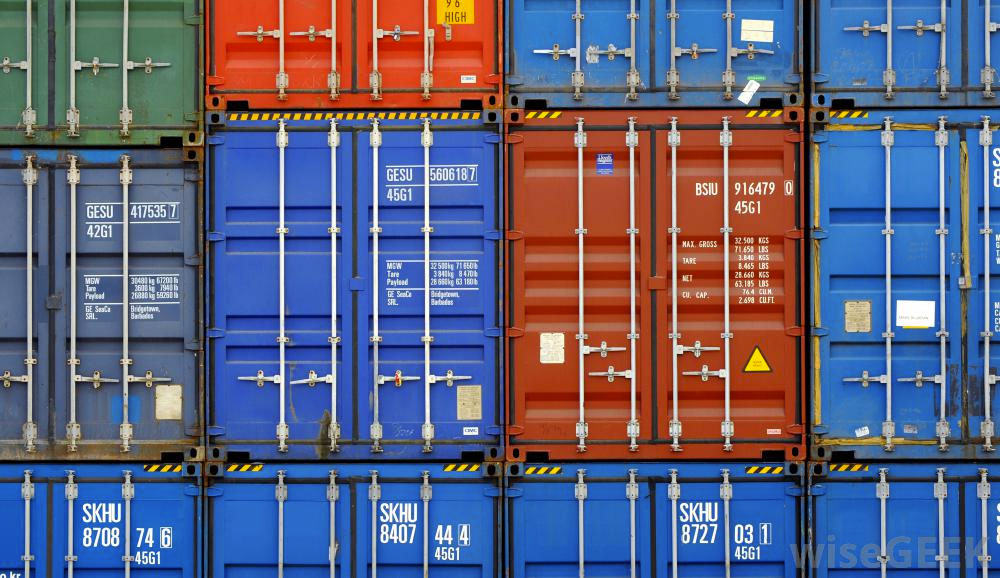
How to Release Imported Item from Philippine Customs

In this post, we will walk you through the steps by step guide on how to release your imported shipments from the Philippine Bureau of Customs (BoC)


Step 1: For new company or individual who wants to import any commodities with commercial value and or in commercial quantity, you first need an Import Clearance Certificate from the Bureau of Internal Revenue. Then you need to apply for Importer’s Accreditation to the Bureau of Customs. Only accredited importers have the privileges to imports any commodities whether regulated imported commodities or freely imported commodities.


Step 2: Import documents required for shipments to the Philippines include:


1. Commercial invoice/Pro-Forma invoice


  •  Should include a detailed description of the goods i.e. what is it made of, what is it part of, what is it used for.

  • The value indicated must be correct. If the shipment consists of more than one item, the importer must provide a value breakdown and ensure that the total amount tally to the total value of the shipment.

  • The value must be transaction value – the price paid or payable – for the item/s in case the item has been provided free of charge or as a gift.

  •  Putting “No Commercial Value” will lead to Customs asking the consignee to provide value evidence such as proof of payment, purchase order, or telegraphic transfer.

  • The invoice should also include the quantity, weight, unit price, currency and country of origin (COO).

2. Bill of lading (for sea freight) or air waybill (for air freight)


  •  Should be filled out completely and accurately.

  •  Make sure all the information is consistent with the commercial invoice.

  •  A revision in the declared value once a shipment reaches the destination port is subject to Customs approval.

  •  Make sure to include a reachable consignee contact so the destination port can easily inform them about the shipment’s arrival and advise of any necessary clearance paperwork.

3. Packing list – A document that details the merchandise in the shipment, along with information on how it was packed, how the items are numbered, the serial numbers, and the weight and dimensions of each item.


4. Applicable special certificates/import clearance/permit depending on the nature of goods being shipped and/or requested by the importer/bank/letter of credit clause, e.g., Food and Drug Administration (FDA) license; and


5. Commercial Invoice of Returned Philippine Goods and/or Supplemental Declaration on Valuation.


6. For a Letter of Credit (L/C) transaction, a duly accomplished L/C, including a Pro-Forma Invoice and Import Entry Declaration for Advance Customs Import Duty (ACID) is required. A Pro-Forma Invoice is required for non-L/C transactions (e.g., Draft Documents against Acceptance (D/A), Documents against Payment (D/P), Open Account (OA) or self-funded documentation).


7. Additional documents for certain imports – Importers bringing in animals, plants, foodstuff, medicine or chemicals must additionally obtain a Certificate of Product Registration from the Philippines’ Food and Drug Administration.


Step 3: File an Entry
Entry must be filed in the Customhouse within 30 days from the date of discharge of the last package from the vessel, which shall not be extendible. Failure to file the entry constitutes implied abandonment and will result in the ‘ipso facto’ forfeiture of the goods/shipment.
You or your customs broker may have the software to file Bill of Entry at office or home. If you do not have such facility, you can approach private EDI (Electronic Data Information) service providers who can arrange to submit the data on behalf of you.


Step 4: Payment of Duties and Taxes for ATRIG

  •  An ATRIG is an authority issued by the BIR, addressed to the Commissioner of Customs, allowing the release of imported goods from customs custody upon payment of applicable taxes, or proof of exemption from payment thereof, whichever is applicable.

  • The BIR Revenue Memorandum Order (RMO) No. 1-2016 directs all applications for ATRIGs for excisable products be processed and issued centrally at the BIR National Office in Quezon City.

  •  Only applications of importer-applicant and broker-representative who are duly registered BIR taxpayers will be processed.

  •  An individual importer-applicant must present a photocopy of his/her latest annual income tax return together with the audited financial statements duly stamped received by the BIR. These will be used in the valuation of the individual importer-applicant’s financial capacity to import.

  •  Prior ocular inspection of the imported goods would be conducted if necessary.

Step 5: Release of Cargo
Upon satisfying all these requirements of, you can now retrieve your import goods from the Customs.


The import customs clearance procedure in the Philippines can be very lengthy and tedious, especially for those small and medium businesses. If you need a professional help to ensure a fast and hassle-free release of your import goods, contact Excelsior Worldwide Logistics Corp. today at (063) 525-9775 or send an email to wecare@excelsior.ph



Tips to Run a Successful Importation Business

In this post, we will give you some proven tips and tricks that will surely help you run a successful importation business today.

  1. Create Your Website and Start Blogging


One of the most effective ways to find networks, potential investors, and customers is through a website. According to statistics, over 6 billion searches are being made each day, making it the most cost-effective platform you can use to market your business today.


  • Get a domain name. While it is very common for businesses to have domain names that are the same as their business names (such as walmart.com), you can pick a domain name to include any text phrase you want as long as it is not already taken.


  • Choose a website builder. Website builders are tools that typically allow the construction of websites without manual code editing. To know more about this, check this guide to choosing the right website builder.


  • After you build your business website, it’s time to fill your website with content and information relevant to your products and services. Check out this post to learn more about successful business blogging.


  1. Select a Product to Import

There are a lot of ways to select the product you want to import and sell in your locality. For example, you can import the products which are currently trending in your area but is not fully satisfied yet by the local providers.

You can also create your own product, such as handmade crafts, then source the raw materials from other countries. Whatever it is you want to sell, make sure that there is a viable market for it, and you know exactly the selling points of that product in the market.

  1. Find the Right Market

After you identified the product you want to sell, you need to pick someplace to sell it. Here are some tips to help you pick the right market for your product:

  • Know what you are offering and you will be able to determine who will be buying it.
  • Do the right amount of research. By collecting some useful data on the market situations, needs and customer’s profitability you can design marketing strategy which will work in the targeted niche.
  • Your business model matters. Running a B2B or B2C business determines the niche strategy you should develop for your import business.
  1. Find a Reputable Supplier

The easiest way to find a supplier for the product you want to import is to consult some specialized online resources: Alibaba, Global Sources, ThomasNet, Makers Row, and MFG. You can also try searching the internet for specific keywords, for example, “Taiwan, bicycle parts manufacturers” to see what is currently available online. Either way, ensure the following when choosing an overseas supplier:

  • Make sure they are a good fit for your company: provides impressive product information, packaging, process, and has a world-class reputation in the industry.
  • Make sure they have the capacity to keep up with the demand.
  • Make sure you have what it takes to out the import partnership you’re about to make.
  1. Set the Price of Your Product

Typically, importers use the cost-plus pricing method to price their import goods. In this method, the importer takes a markup percentage over cost – which is the price charged by the overseas supplier to you when you buy from them. That markup becomes your profit or commission.

The goal is to price your product with markup that will not exceed what your target market is willing to spend. The more goods you sell, the more profits you’ll generate.

  1. Find Customers

As long as your website ranks well in search engines, customers will be able to find you in the online space. However, you should also use other ways to find customers. Check with local contacts, such as trade organizations, Philippine Chamber of Commerce & Industry, embassies and trade consulates.

These organizations can provide you with contact lists specific to your industry and also suggest trade shows that are taking place locally and internationally that might help you connect with potential customers.

You can also use other digital platforms such as social media to connect with your customers in a faster and efficient manner. Facebook, LinkedIn, and Twitter are full of users seeking for products and services, so using these platforms can help you stay relevant and present to potential customers worldwide.

  1. Select a Trustworthy Freight Forwarder

Your chosen freight forwarder can make or break your import business, so choose one wisely. Excelsior Worldwide Freight Logistics Corp. is a global freight forwarder that can help you transport your import goods to where you will be selling it in an efficient and timely manner.

Our trustworthy and reliable international freight forwarding service has been the backbone of many import business in the Philippines for 16 years. Catering to different industries, our logistics service has saved all our clients a lot of time, effort and anxiety. Not only we help our clients with their transport needs, we also help them prepare all the necessary shipping arrangements to ensure a seamless import process. With our expertise in Philippine importation process, you will be able to ensure a more successful importation business than you could have ever imagined!

These are the proven tips that will help you run a successful importation business in the Philippines. If you want to learn more about our freight forwarding services, Contact Excelsior Worldwide Freight Logistics Corp. today at (+632) 525-9775 or email us at wecare@excelsior.ph.

Cargo Insurance: Top Reasons Why Your Import/Export Business Need It!

In every type of business, it’s minimizing risk is equally important as achieving maximum return. If your business imports or exports its products, it means you’re putting an investment at stake every time you ship cargo. This is why it is extremely vital to have your cargo covered with cargo insurance because your business could lose an absolutely insane amount of money in case everything went spiraling down.

In the Philippines, under Sec.99 of Presidential Decree No. 612, also known as Insurance Code of the Philippines, a marine insurance should cover you against damages or loss on:

• Vessels, craft, aircraft, vehicles, goods, freights, cargoes, merchandise, effects, disbursements, profits, moneys, securities, chooses in action, evidences of debts, valuable papers, bottomry, and respondentia interests and all other kinds of property and interests therein, in respect to, appertaining to or in connection with any and all risks or perils of navigation, transit or transportation, or while being assembled, packed, crated, baled, compressed or similarly prepared for shipment or while awaiting shipment, or during any delays, storage, transhipment, or reshipment incident thereto, including war risks, marine builder’s risks, and all personal property floater risks;

• Person or property in connection with or appertaining to a marine, inland marine, transit or transportation insurance, including liability for loss of or damage arising out of or in connection with the construction, repair, operation, maintenance or use of the subject matter of such insurance (but not including life insurance or surety bonds nor insurance against loss by reason of bodily injury to any person arising out of ownership, maintenance, or use of automobiles);

• Precious stones, jewels, jewelry, precious metals, whether in course of transportation or otherwise.

• Bridges, tunnels and other instrumentalities of transportation and communication (excluding buildings, their furniture and furnishings, fixed contents and supplies held in storage); piers, wharves, docks and slips, and other aids to navigation and transportation, including dry docks and marine railways, dams and appurtenant facilities for the control of waterways.

• “Marine protection and indemnity insurance,” meaning insurance against, or against legal liability of the insured for loss, damage, or expense incident to ownership, operation, chartering, maintenance, use, repair, or construction of any vessel, craft or instrumentality in use of ocean or inland waterways, including liability of the insured for personal injury, illness or death or for loss of or damage to the property of another person.

Whether exporting or importing or using an air freight or ocean freight for your international shipping, marine cargo insurance covers loss and/or damage of cargo while it is in transit between the points or origin and final destination.

Here are five reasons why your import/export business need to protect your freight with cargo insurance.

1. Reduce Risk of Financial Loss

Image result for financial loss

image from wibestbroker.files.wordpress.com

Whether you’re an exporter who has not been paid for the goods at the time of shipment or an importer who has paid for all of the goods prior to receiving the, having your cargo insured protects you from potential financial loss if the goods are lost or damaged during the transit.

2. General Average – Speed up the Release of Your Cargo

Related image

image from fastpostitalia.com

In cargo insurance, general average means general loss. When the general average is declared, both the ocean carrier and the cargo owners are liable for loss or damage to all the cargos aboard in the ship, as well as the ship itself. Under this circumstance, you may be required to post a bond and/or cash deposit in order to obtain the release of your cargo following a general average – even though there was no loss or damage to your goods.

By availing cargo insurance, you take the load off your shoulder as the insurance company assumes the responsibility and expedites the release of your cargo.

3. Contractual Requirement

Related image

image from mediashower.com

If your customers obligate you through a contract to provide ocean cargo insurance, that is because they want to protect their interest and or their bank’s interest as well. This is especially true when selling goods in CIP or CIF (click the link to learn more about Incoterms). Failing to avail cargo insurance cannot only subject you to financial loss if there is loss or damage to the goods, but non-compliance with the terms of your contract with the buyer can also result in loss of sales and legal problems.

4. Coverage for Limited Carrier Liability

Image result for liability coverage

image from businessinsurancequotes.com

By law, carriers are not fully responsible for many common causes of loss in transit e.g. Acts of God, general average, etc. In the event they are liable, their liability is also limited – either by contract stipulated in the bill of lading or by law. To make up for the limited carrier liability, the best thing that you can do is to purchase a cargo insurance.

5. More Control Over Terms

Image result for shipping coverage

image from i0.wp.com

While counting on your buyer’s or seller’s insurance may be a viable option, having a cargo insurance provides another layer of security and peace of mind. Purchasing a cargo insurance puts you on the higher ground by giving you more control over insuring terms, valuation, and limits provided by each insurer, ensuring that all these are a perfect match to your business’ needs. As an importer, purchasing your own cargo insurance saves you a lot of time and effort from dealing with foreign insurance company provided by the seller, especially from a country with a different language.

These are the top compelling reasons why you should definitely need a cargo insurance for your import/export business. Want to know more? Contact Excelsior Worldwide Freight Logistics Corp. and let us help you in your journey in the import-export industry this 2017 and beyond. Call us at (+632) 525-9775 or email us at wecare@excelsior.ph.

Is Your Importation Considered as De Minimis Importations and No Longer Subject to Duties and Taxes?

If you’re a business owner looking for ways to minimize importing cost, then you should familiarize yourself with one of the salient features Customs Modernization and Tariff Act (CMTA) which was implemented October last year.

Under Customs Administrative order no. 02-2016, De minimis provision of the CMTA is implemented which states that imported goods in the Philippines with a freight on board (FOB) or free carrier (FCA) value of P10,000 and below are no longer subject to duties and taxes.

This said provision aims and targets to 1) minimize the importation costs and customs administration costs of clearing such importations, without compromising customs border enforcement patrol and; 2) adapt the growing trend toward trade liberalization and facilitation and harmonize the country’s customs laws with different applicable international trade agreements.

Here are some facts one needs to know in order to assess whether your importation might be free of duty and taxes.

a.) Importations brought in by passengers or sent thru balikbayan boxes may be considered as de minimis when they have complied the parameters of Conditionally Free Importations.

Image result for balikbayan box

image from rappler.com

b.) Importations under such, is still needed to be lodged and processed.

Image result for delivery box sorting

image from cbsistatic.com

c.) Random and non-intrusive examination will be conducted but customs examiners may also physically examine and inspect the goods in order to prevent the entry of contraband goods.

Related image

image from taiwantoday.tw

d.) Tobacco, wines and spirits are still subject to excise tax even if its value falls within the de minimis value.

Image result for wine and cigarette

image from techfactslive.com

e.) Tobacco and liquor products exceeding the allowable limits carried by passengers but within the limits of the de minimis value are also excluded.

Image result for limit reached sign

image from arwsome.com

f.) Shipments which are declared as “without commercial value” or “of no commercial value” are excluded from immediate release as de minimis importations.

Image result for no commercial value box

image from uthandoproject.org

g.) Goods that needs import permits, licenses, requirements, and clearance are still needed to be complied with unless such is for personal use.

Image result for import permit

image from tanzania.co.zm

These are only several and important facts about the de minimis provision. The said provision will also be reviewed every 3 years and amended or revised, if necessary. Your shipment might qualify in this provision. For assistance, feel free to contact Excelsior Customs Brokerage where peace of mind of clients is our service.

Excelsior Worldwide Logistics Corp.