Importer Facts: Choosing Your Agreement Between Your Supplier – Incoterms 2010

If you are planning to start an import and export business on an international basis, or you are expecting to receive or ship goods from an overseas market and you already have a list of potential suppliers at hand, the next step that you will take now is to choose the appropriate delivery agreement between you and your supplier.

By that point, you should have already familiarized yourself with the International Commerce Terms or Incoterms, which is a set of standardized trade terms published the International Chamber of Commerce or ICC. As the basis of delivery agreement between you and your overseas supplier, Incoterms usually includes the information on how goods will be delivered, who will cover the payments, who is responsible for insurance, and who handles specific shipping procedures.

The latest edition of Incoterms was released in 2010 and includes eleven rules which are divided into two classes – 1. Rules for Any Mode or Modes of Transport, which may be used without regard to any kind of transportation used; and 2. Rules for Sea and Inland Waterway Transport, which emphasizes that the point of delivery and the destination of the equipment are both ports.

To decide which of these rules is best for your import and export business, we will discuss all the Incoterms 2010 rules and weigh down the advantage of each in terms of passing on responsibilities and cost.

RULES FOR ANY MODE OR MODES OF TRANSPORT

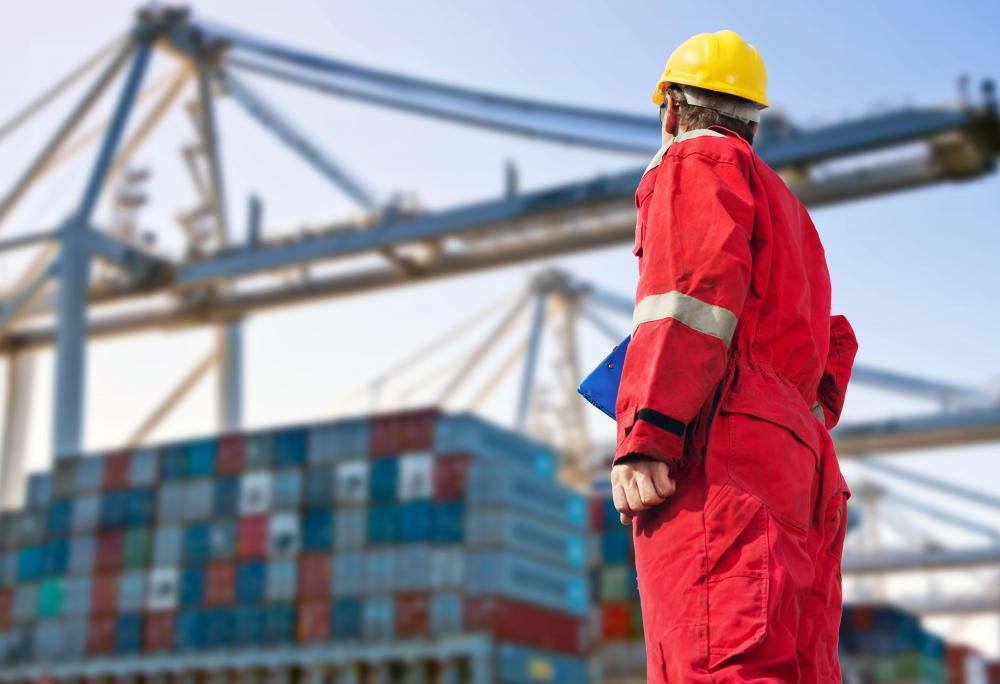
Image from directorytransport

  • EXW – Ex Works

According to ICC, Ex works means that the seller delivers when it places the goods at the disposal of the buyer at the seller’s premises or at another named place. This rule places the minimal responsibility to the seller or supplier since they only have to make the goods available, properly packaged at the specified place which is usually at the supplier’s factory or warehouse.


This is not typically used in the cross-border transaction since it presents many transportation difficulties. The buyer also bears all the cost and risks involved in collecting the goods from the seller’s premises to the designated destination.

  • FCA – Free Carrier

ICC defines Free Carrier as the agreement when the seller delivers the goods to the carrier or another person nominated by the buyer at the seller’s premises or another named place.” When the goods have already been cleared, it can then be delivered by the seller to the carrier at the designated location stated in the contract.

When the goods arrive at the point of location, the buyer will then assume the responsibility. If the location to deliver goods is not mentioned in the contract, the seller may choose within the place or range stated where the carrier take the goods into his charge. This term is usually used in container transport movements such as RO/ RO (roll on – roll off) used by trailers and ferries.

  • CPT – Carriage Paid To

Carriage Paid To means that the seller fulfills his obligation if they deliver the goods to the carrier or another person nominated by the seller at an agreed place. This is only applicable when the seller contract for and pay the cost of carriage necessary to bring the goods to the named place of destination. Like FCA, the seller may select the point at the named place of destination which best suits its purpose.

                The risk of loss and damage to the goods, as well as any additional cost incurred after the goods  have been delivered into the custody of the carrier is then transferred to the buyer. If ever that there are several successive carriers, the transport risk passes from the seller to the buyer when the goods are delivered to the first carrier in the chain.


In this term, the seller has no obligation to hire insurance transport to cover the goods from the point place of delivery to the point of destination. The seller is also tasked to complete all the formalities and carry all the costs of customs clearance for export, but not the import clearance needed in the place of destination.

  • CIP – Carriage and Insurance Paid To

In its most basic format, Carriage and Insurance Paid To means that the goods will be delivered by the seller to carrier or person nominated by the buyer at the place mutually agreed by the seller and the buyer, and that the seller arranges and pays for all costs for the transportation, including insurance (which is usually kept at minimum) of the goods up to the agreed port of destination.

Like CPT, the obligations of the seller end when he successfully delivered the goods to the carrier, but typically do not end until the carrier reaches the agreed destination. Unlike other Incoterms, the stipulated point of delivering under this terms does not necessarily mean that it is the final delivery point.

  • DAT – Delivered at Terminal

Incoterms “Delivered at Terminal” means that the seller delivers when the goods, once unloaded from the arriving means of transport, are placed at the disposal of the buyer at a named terminal at the named port or place of destination. “Terminal” may include place any place, whether covered or not, such as factory, warehouse, container yard or road, rail or cargo terminal.

Under this Incoterms, the seller must complete all the formalities and shoulder all the costs of customs clearance for export. The seller also bears all the risk involved in bringing the goods to and unloading them all at the terminal at the named port or place of the destination.

  • DAP – Delivered at Place

Incoterms “Delivered at Place” means that the seller delivers when the goods are placed at the disposal of the buyer on the arriving means of transport ready for unloading at the named place of destination. Under this Incoterms, the seller agrees to pay all costs and assumes all risks related to bringing the goods up to the place of destination.

  • DDP – Delivery Duty Paid

Incoterms “Delivery Duty Paid”  means that the seller fulfills their obligation when they successfully delivered the goods at the named place in the country of importation. Under this terms, the seller has to shoulder all the costs and risks related to delivering the goods to the place of destination. Unlike the other Incoterms, the seller has also the obligation to clear the goods not only for export but also for import, which means that they have to pay any duty for both export and import and to carry out all customs formalities. While Ex Works is Incoterms that represents the minimum obligation by the seller, Delivery Duty Paid represents the maximum obligation.


RULES FOR SEA AND INLAND WATERWAY TRANSPORT

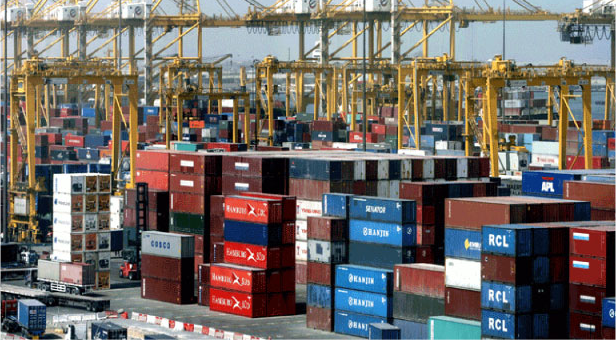
Image from roanoketrade

  • FAS – Free Alongside Ship

Free Alongside Ship basically means that the seller fulfills their obligation when the goods have been placed alongside the vessel on the quay or on a barge at the named port of shipment. This means that the seller has to carry all the risks of loss and damage to the goods until the goods are alongside the ship. Under this terms, the buyer is required to clear the goods for export, and should only be used when the buyer does not have the capacity to carry out directly or indirectly the export formalities.

  • FOB – Free on Board

Incoterms Free on Board states that the seller fulfills their obligation when the goods have been delivered on board the vessel nominated by the buyer at the named port of shipment or procures the goods already so delivered. This Incoterms indicates that the seller has to shoulder all the costs and risks of loss and damage to the goods until the goods have finally arrived on board the vessel, and the buyer will bear all costs from that moment onwards.

  • CFR – Cost and Freight

Cost and Freight Incoterms mean that seller delivers the goods on board the vessel or procures the goods already so delivered. The seller covers all the risks of loss and damage to the goods until the goods are on board the vessel.  However, the seller has to shoulder the costs of bringing the goods from the point of origin to the place of destination. They are also tasked to clear the goods for export, but never on insurance.

  • CIF – Cost, Insurance, and Freight

Cost, Insurance, and Freight Incoterms is almost identical to CFR – with an exception for the insurance portion. Under this Incoterms, the seller fulfills their obligation to deliver when the goods are already placed on board the vessel or procure the goods already so delivered. Like CFR, the risks of loss and damage passes when the goods are on board the vessel. Aside from freight and clearance cost, the seller has to procure and pay for a marine insurance against the buyer’s risks of loss of or damage to the goods while in transit.


Choosing the appropriate Incoterms is one of the most important step in the shipping process as it ensures that both parties – the seller and the buyer – understands their responsibilities. It also streamlines the whole shipping process so that goods will arrive at the point of destination with less time and hassle, which is a win-win situation both for the seller and buyer.

If you have any questions about Incoterms, feel free to call Excelsior Worldwide Freight Logistics Corp. Call us at (+632) 525-9775 or email us at wecare@excelsior.ph


Advantage of Having the Services of a Freight Forwarding Company

Advantage of Having the Services of a Freight Forwarding Company

Image result for freight forwarding services

Imabe from nationalaircargo.com

In the shipping world, one of the most common catchphrases that we often hear is the freight forwarder or forwarding agent. As one of the most critical elements in the global supply chain, freight forwarder has the task to assist and support you in the importing and exporting process- ensuring that all your goods are delivered to your warehouse safely and efficiently.

As your business grow and expand, and the competition in the industry becomes stiffer, you must also keep up with the number of shipments that must be delivered to your customers locally and abroad. To achieve that, you can have the services of a freight forwarding company to manage the shipping function on your behalf, while you stay focus on the things you do best. Detailed below are some the key advantages of using a freight forwarder in your business.

Freight Forwarders Offers Services That Are Rather Complex for You to Handle

Image result for service offering

Image from googleusercontent.com

Choosing a freight forwarding service instead of handling the whole logistics functions in-house or another type of logistics provider can bring in a lot of difference especially on the type of services that they can handle. A lot of small and medium enterprises doesn’t have the capability and resources to manage all the shipping requirements effectively, in which case a freight forwarder does have.

Using their knowledge and skills in the importing and exporting industry, they can transport your cargo to any destinations more efficiently. They have the resources to handle unexpected circumstances like redirected shipments or delays, saving you a lot of time and effort in the process.

Some of the services that a freight forwarding provides includes:

  • Inland Transportation Tracking- Freight forwarding firms track your shipments while they are in transit by truck, rail, or air.
  • Shipping and Export Documents Preparation- Because shipping a high volume of goods is just another day for freight forwarders, they have all the required skills in the shipping documentation.
  • Warehousing- They either have their own warehouse in several locations or lease one in an area they don’t service themselves.
  • Booking Cargo Space- They know which carriers are best at serving a location so they have the advantage when it comes to shipping abroad or even to various regional domestic markets.
  • Freight Consolidation- They can turn several small shipments into one large shipment at a lower cost.
  • Cargo Insurance/ Filing Insurance Claims- Because of their knowledge about the intricacies of shipments, they can obtain insurance coverage for your shipments as well as how to deal with insurance should anything go wrong with a shipment.

    Freight Forwarders Offers a Specific Set of Services at an Ideal Cost

    Image result for cost

    Image from mindtools.com

    Another advantage of having the service of a freight forwarding company in relation to other outsourcing logistics solutions, such as third-party logistics companies or freight brokers, is that they offer a specific set of services which prices are ideal and more cost-effective than 3PL companies that have a broader range of services and freight brokers whose scope of services is only limited to arranging the mode of transportation and does not issue their own bill of lading.Freight forwarders, because of their large network of connections for their services, can negotiate with carriers for lower cost due to the high volume of containers they ship. They can find better freight quotes and have the knowledge which carrier has the most cost-effective routes, allowing your shipments to reach their final destinations faster and at an ideal price.

    Freight Forwarders Brings Simplicity


    Image result for logistics simplicity


    Image from cerasis.com

    Truth be told, the shipping industry is indeed full of complexities and volatility. Dealing with these by yourself might result into an expensive shipping process or worst- lost shipments. By having the services of a freight forwarding company, your shipments can move much easier because you are only communicating with one entity.
    For one aggregated cost from a single freight forwarding company, you can save a lot of time, money and frustrations. You do not have to mingle with the different trucking company, air carrier, and an ocean carrier to negotiate for services and compare prices because freight forwarders combine these to give you more flexible shipping options.

    Freight Forwarders Gives You Sense of Control


    Image result for supply chain

    Image from handshake.com

    Manageability and organization are one of the most important aspects for many businesses today, especially in logistics function. Freight forwarders give its clients a sense of control over their supply chain, allowing them to foresee the risks as well as to recover quickly in the event of loss of shipments. Compared to many 3PL companies who have a broader breadth of service and stiff structure, freight forwarders have a unique combination of services which allows you to modify the shipping plan to make sure all your shipments reach their destination safely and in a timely manner.

    Furthermore, many 3PL companies, due to their wide-ranging scope of services, cannot offer transparency and personal touch that international shippers need. If your shipment is lost, it could take a very long time before you get the answer you need. Freight forwarders, on the other hand, utilize their wide range of networks to quickly trace the issue to its roots, acclaiming solution at first-hand.

    These are just some of the many reasons why partnering with a freight forwarder can help your import or export business grow and expand. Knowing these benefits, what you should do now is to evaluate if your needs do qualify for a freight forwarding service since not every shipment demands this type of shipping arrangement.

    Finding an Honest and Reliable Freight Forwarder?

    Image result for freight forwarder

    Image from wisegeek.com

    You’ve found one! As an international freight forwarder, Excelsior Worldwide Logistics Corp. ensures that each cargo arrives at its destination safely and in a timely manner. We act as your shipping agent to transport your cargo from point A to point B without hassle. Plus, our wide network of air, sea, and land carriers allows your shipments to travel on the most effective routes across different channels. Let Excelsior guide you in the world of shipment today. Call us at (+632) 525-9775 or send us an email at wecare@excelsior.ph

Importer Tips: How to Avoid Shipping Storage and Demurrage

If you’re new in the importing or exporting world, you might be surprised to receive an unexpected bill showing demurrage, storage & detention charges – terms that you haven’t even heard yet, let alone know the cause. Or you might have experienced this already for some time now, but either way, these costs might hurt your pockets big time. So, to clear up your confusion, let’s talk about when you might see these charges, and how you can avoid them.

Storage

Image from 2eastwest.com

Storage charges accumulate at port facilities, airline terminals, and bonded warehouses when a container remains at the site beyond the allotted “free days” provided by the airline, warehouse or Arrastre operator after arrival.

Storage Fee- with standard rate for FCL (see PPA memo). Standard Free time 5 days.

for LCL (see BOC CMO 41-15)

Cut your losses by following these tips to avoid storage cost:

  • Ensure that there are no issues with the shipping documents. It is the common reason for delaying the release of container.
  • For regular cargo, consider a Seaway Bill of Lading/Telexed Release instead of an Original Bill of Lading.
  • Always keep a keen eye over your shipment and the arrival of the vessel, so you will know exactly when you free time initiates and expires.
  • Advise broker for immediate releasing.

Demurrage

Image result for demurrage

Image from thewillnigeria.com

Demurrage fee is levied by shipping lines for containerized shipments only, however, this fee is charged when the containers are still full and has not been cleared up by the consignee within the seven (7) days free time & extendable as per approval of the shipping line.
Menacing as it is, here are some tips to avoid demurrage charges:

  • Talk with your freight forwarder and know in advance a number of free days granted.
  • Dispatch your shipment as early as possible. Excelsior Worldwide Logistics can help you clear your cargo ahead of time provided that all documents handed in a timely manner.
  • If your shipment comes in volumes, you may request an additional free time from your freight forwarder or carrier. (Most often, the volume of your shipments should be close to 1,000 containers per year to be granted for extended free time.)?
  • Ensure that your trucking company can pick up the shipments within the allotted free time, and a trucker has been assigned to your shipment. Set-up a backup or alternate trucker in the case of any circumstances that will prevent them from picking up your cargo in a timely manner.
  • Analyze all the papers containing the terms and conditions of your transportation, warehousing, and sales contracts to find out the situations under which your company may be held responsible for demurrage charges.

Detention

Image result for shipping detention

Image from chinashippingaustralia.com

When the container has been picked up and out gated from the terminal, it must be returned within 72 hours otherwise detention charges will be imposed.

As always, it is important to seek the help of a licensed customs broker and freight forwarder to help you avoid or lessen this unplanned additional charges you might incur in importing/exporting process. They can help you understand the whole shipping process, and makes sure that you stay ahead of schedule and your cargo will move in a timely manner.

Allow Excelsior Worldwide to help you ensure a storage free -demurrage free clearance of shipments. Contact us today to learn more about our global logistics. Call (063) 5259775 or visit our website www.excelsior.ph

How To Choose The Best Customs Broker

How To Choose The Best Customs Broker

Image from LinkedIn

Customs brokers provide professional and expert service on customs clearance
of goods during importing and exporting. Customs brokers are in charge of
making sure that the rules and regulations of international trade are consistently
met, and they are responsible for the interaction and communication with the
customs of a shipment’s country destination.

There are several factors that must be taken into consideration when it comes to
choosing the best customs broker.

1. Eligibility

The very first thing that you need to check with your customs broker is their
eligibility. Your customs broker must be a license holder, which means that he or
she is an accredited customs broker, and he or she has been able to pass the
licensure examination specific for customs brokers. Moreover, if you are looking
for a customs brokerage company, this company must empower its employees to
become licensed customs brokers.

In order to become a licensed customs broker, one must go through a four-year
course and take a licensure exam, which in the Philippines is administered and
regulated by the Philippine Regulatory Committee (PRC). The intensive
education process that licensed customs brokers goes through enables them to
have the confidence and efficiency that they need to carry out their
responsibilities.

Every country usually has an official list of active brokers from the government. It
will be wise to first check with this list for any customs broker that you will be able
to get in touch with.

For the official list released by the Bureau of Customs of the Philippines, the list
can be found here.

2. Technical Knowledge and Skills

Interfacing with the local and international customs is no mean feat.

The laws, rules, and regulatory requirements pertaining to transport of goods can
be very complex. This is why it is critical for your customs broker to have a high
level of technical knowledge, as well as access to up-to-date information when it
comes to shipments, importation, and exportation. Your customs broker must
have high understanding of entry protocols and requirements, valuation, fines and penalties, taxes, and the like.

3. Track record

It is also wise to ask industry peers for recommended customs brokers, as well
as existing clients of customs brokers for feedback regarding their performance.
This way, you can gauge their integrity, professionalism, and level expertise.

You might also want to consider making sure that your customs broker of choice
has no pending case with the customs of any country.

4. Specialty and experience

The ease of any work always depends on the experience of the one doing the
work. Customs brokerage is no different. You need to consider working with a
customs broker who has had experience, or better yet, has a specialization in the
handling of the goods that you will be shipping.

This way, you will not be caught off guard when it comes to duties, taxes, and regulations, or even obscure agreements and provisions, special cases, or some
exceptions to the rule, if there are any. After all, each country has a unique set of
shipping rules and regulations, and all goods are handled and shipped in a
specific way.

5. Professionalism and Integrity

The customs broker is the one who interfaces with customs in behalf of the
importer or exporter. This means that the customs broker is the one who
represents you and your business. In this regard, it is important to have a
customs broker who is able to satisfy all legal requirements in an efficient,
effective, and ethical way.

Moreover, the goods that you are shipping are valuable, and oftentimes irreplaceable. It is therefore important to make sure that these goods are being
handled by people only with utmost professionalism and unbreakable integrity.

Choosing to work with a customs broker is one thing, and choosing the best
customs broker for your business and your goods is another thing. It is important
to make sure that the customs broker you are working with actually has what it
takes to get the job done for you, and provide you with a service that is
exceptional and efficient.

Excelsior is a freight logistics corporation who not only moves your shipment, but
also takes care of customs clearance on your behalf. Excelsior has been
providing exceptional, excellent, and experienced service for 15 years,
throughout all the phases of shipment – from freight forwarding to customs
brokerage.

You can also be assured that at Excelsior, we value or partners (we treat our
people as partners, not employees). We support and encourage all partners to
become licensed customs brokers. This is to make sure that our clients are
provided only with excellent customs expertise and superior customer service. To
date, 80% of Excelsior Partners are customs administration graduates. Six of the
Excelsior Partners are licensed customs brokers; we are proud to note that this
number exceeds industry average today.

Allow Excelsior Worldwide to help you navigate through the world of import and
export. For more information on our customs brokerage services and to know
more about Excelsior, visit our website today at /. For any
queries that you may have, you may call us at (063) 5259775, or send us an
e-mail through wecare@excelsior.ph.

What Is a Customs Broker and Why Do You Need One?

What Is a Customs Broker and Why Do You Need One?

Importing and exporting are two strategies currently being used in business expansion. In exporting, a business grows by tapping into international markets
and establishing international contacts. In importing, a business is able to provide
solutions to existing problems, as well as supply existing needs, through granting
access to products needed locally but only available elsewhere.

In the process of importing and exporting, the shipment will have to come in
contact with the customs, a government agency that manages and regulates the
flow of goods in and out of any country.

This is where a customs broker plays an important role.

A customs broker is a licensed individual or firm that ushers all shipment,
whether imported or exported, through customs. It is the broker who represents
the shipper when it comes to any dealings with the customs authorities, and
prepares the necessary documents for the shipment. A customs broker also
ensures that every phase of the shipment is consistent with the set rules and
regulations of goods transfers, which are unique, and not to mention constantly
changing, in every country.

Customs brokers also provide assistance when it comes to the classification, valuation, and entry protocols of goods, while making sure that all details and
necessary procedures associated are ironed out. Customs brokers also ensure
correct information with regard to taxes and tariffs, all in an effort to usher goods
towards its destination in an efficient and timely manner. The timely and efficient
ushering of shipment is critical because any form of delay in customs clearance
will cost a significant amount of time and money.

It is also important to note that communicating with different countries is no mean
feat, especially if there is a language barrier. In this sense, the customs broker
also serves as a translator, thereby ensuring that communication lines are not
broken or unduly diverted.

All in all, a customs broker performs all technical coordination functions relating
to importation, exportation, and overall goods transfers.

Because of the laborious nature of the processes involved in international trade,
as well as the technical requirements associated with importation, exportation,
and customs transactions, it is highly advisable for any business to avail of the
professional service offered by customs brokers. This way, businesses will have
the confidence and peace of mind that their shipments will be able to cross
international borders in a safe and efficient way. Furthermore, the services that
customs brokers provide enables business owners and staff to focus exactly on
what they need to focus on: managing their business.

As a business owner, getting a customs broker to help you with your shipment is
a wise business decision that will help you and your business remarkably. It is
not only practical, but also time and cost-efficient.

At Excelsior, we value your business and your time. This is why we want to offer
you a customs brokerage service that is efficient, professional, and ethical.

Allow Excelsior to assist you in the movement of your shipment, meet all of the
importation and exportation requirements on your behalf, and fulfill all
international trade and customs rules and regulations, all for a successful and
hassle-free shipment for you and your business.

To know more about Excelsior, visit http://www.excelsior.ph/.

What Is the Best Freight Forwarding Company?

Image from wisegeek.org

Freight forwarding is the process of preparing goods for
transport in behalf of the shipper. The shipping process
includes moving the goods from one carrier to another,
transport tracking, freight consolidation, negotiation of freight
charges, and preparation of necessary documents.

The shipment of goods can be via air, sea, or land.

There are many freight forwarding companies, especially in
this day and age where the importing and exporting industry
is seeing a rising trend. After all, the transportation of goods
across the world is considered to be the keystone of modern society. So how does one know and decide which freight
forwarding company to choose?

1. Owns the carrier

Technically, fright forwarders serve as the middleman
between the shipper and various transportation services to
get the shipment to its destination. However, there are some
freight forwarding companies that own transportation
services like trucks and ships, thus eliminating the need to
coordinate with a third party carrier. As a result, such
companies are able to take full control of the freight
transport, thereby reducing cost, and promoting efficiency
and reliability.

2. Has a significant amount of knowledge and
experience

Of course, a good freight forwarding company needs to have
a good amount of knowledge and experience about
international transportation processes, as well as rules and
regulations on goods transfer.

It is critical for a freight forwarding company to have a
streamlined process of shipping goods in order to promote
efficiency at all times, regardless of the freight being shipped
and the destination of the shipment.

A good freight forwarding company also needs to have
excellent communication, administrative skills, and attention
to detail. Since freight forwarding involves different steps and
involves different people from different companies (such as
supplier, carriers, and warehouse), it is important to make
sure that there is a seamless coordination and a seamless
transaction among all parties involved.

3. Has problem solving skills

It is also important for a freight forwarding company to have
excellent problem solving skills. They need to be able to
identify the problem across the logistics and supply chain,
and provide the necessary solution to prevent any delays in
delivery, as well as to prevent the recurrence of shipping
problems.

4. Ethical and Professional

Lastly, freight forwarding companies must consistently abide
by rules and regulations of goods transfer, and they must
also have a high level of professionalism.

Professionalism can be seen in the way that the company
coordinates and communications with the shipper, as well as
with all other people involved in the shipping process.
Professionalism can also be seen in how the freight
forwarding company keeps their word with regard to
deadlines and shipping schedules.

Allow Excelsior Worldwide to help guide you through the import & export world. Contact us today to learn more about our global logistics . Call (063) 5259775 or email us at wecare@excelsior.ph

Excelsior Worldwide Logistics Corp Success Story

Early this year, Excelsior Worldwide Logistics Corporation’s success story has been cited by Victory Fort, as an encouragement to business men and professionals in their weekly gathering.

In the series Faith to Conquer that discusses about the worthy cause of faith through obedience, Pastor Jeff Eliscupidez shared how the company turned around from following corrupt practices in the industry, to being fully transformed by obeying what the Bible is teaching in 2009.

With the leadership of its founder and owner, Victor Hermosa, Excelsior experienced a short term contraction in business due to clients who are used to the usual corrupt industry practice to speed up release of their shipments in the government body that overseas importation and exportation of goods.

However, with his strong desire to obey his faith, Victor had to accept the departure of many of his accounts and trust God that obedience will lead to blessings.

In this video Pastor Jeff Eliscupidez shared what happened shortly after obeying God’s call for righteousness.

Currently, Excelsior Worldwide Logistics Corporation is continually experiencing God’s favour and business growth, expanding it’s coverage to be able to accommodate the increasing needs of it’s customers. Aiming to give them the peace of mind by making sure that everything is done right, investing in it’s people development and technology to be able to give topnotch quality service and experience.

To see the full video, click here: https://www.youtube.com/watch?v=JIXKYbc9S34&feature=youtu.be

New Cebu international port project may start in August

Lorenciana, Carlo and Braga, Michael Vencynth (2016, June 24). The Freeman. New Cebu international port project may start in August. Retrieved from http://www.philstar.com/cebu-news/2016/04/29/1577985/new-cebu-international-port-project-may-start-august

CEBU, Philippines – The new Cebu international container port may start construction by August this year if the National Economic and Development Authority Board would approve the project.

Cebu Port Authority General Manager Edmund Tan, however, could not say if the port project will be approved within President Aquino’s term which ends this June. The President chairs the NEDA.

Tan said he was hoping the project would be approved as soon as possible.

Speaking at the Visayas Shipping Conference 2016 yesterday in Cebu City, Tan said NEDA is currently awaiting from the Department of Transportation and Communications “the submission of requisite documents for the said project to facilitate NEDA Board-ICC (Investment Coordination Committee) processing and approval.”

These documents include the feasibility study which was completed in July 2015 and ICC project evaluation forms.

The project, Tan added, is scheduled to be presented to DOTC secretary for approval and subsequent endorsement to the NEDA Board-ICC.

According to the project’s implementation timeline, the target schedule for the construction is August this year and completion is second quarter of 2019.

The feasibility study on the new Cebu port, done by Korean experts, pointed a location in Tayud, Consolacion as the project site.

Among the study’s recommendations include funding from the Korea’s Economic Development Cooperation Fund as the project, which has an estimated project cost of P10 billion, has a poor financial viability.

Tan said the new port will need an access road to connect the port to and from the Cebu North Coastal Road.

The study noted that the traffic on the existing road linked to the access road to the new port will increase due to the increased cargo transport.

“It is recommended to expand lane of the existing road and set up a countermeasure for traffic improvement,” Tan said.

He said the CPA will have to ask the Department of Public Works and Highways for the possibility of funding the road access project.

The study also recommended the application of Korea’s container port development experience to Cebu new port.

The new container port is geared to meet the demands of dynamic and growing economy of Cebu and of the region.

It is expected to provide a long-term solution to the congestion at the existing Cebu International Port due to increasing cargo volume and the shallow water depth of its container berths.

The new port project was included in the Comprehensive and Integrated Infrastructure Program (CIIP) on April 11.

The municipality of Consolacion welcomes the idea of establishing the international port in Barangay Tayud.

Mayor Teresa Alegado believes that transferring the port to other areas like Consolacion will decongest the traffic in the cities of Mandaue and Cebu.

She added that it would also spur economic development of the town.

The traffic congestion at the Cebu International Port area is reportedly caused by big trucks hauling cargoes inside the area.

Duterte OKs P39-B project in Davao

Nawal, Allan (2016, June 24). Inquirer Mindanao. Duterte OKs P39-B project in Davao. Retrieved from http://newsinfo.inquirer.net/792194/duterte-oks-p39-b-project-in-davao

Backers say one of Digong’s last acts as mayor shows he’s probusiness

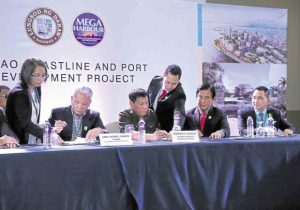
DAVAO City Mayor Rodrigo Duterte, who would officially be President on June 30, signs a P39-billion deal on June 21 for a city project to develop some of its coastal areas. CONTRIBUTED PHOTO

DAVAO City Mayor Rodrigo Duterte, who would officially be President on June 30, signs a P39-billion deal on June 21 for a city project to develop some of its coastal areas. CONTRIBUTED PHOTO

DAVAO CITY—About a week before he leaves this city as mayor to assume the presidency, Rodrigo “Digong” Duterte signed a P39-billion project for port and coastal development that project proponents said was a showcase of Duterte’s support for business that he would bring to Malacañang.

Giving his seal of approval to the project could be one of Duterte’s last acts as mayor of the city.

Duterte signed the agreement with Mega Harbour Port and Development (MHPD) during ceremonies here on Tuesday. MHPD president Victor Songco signed for the developer.

Last year, the city council approved the proposed reclamation project, which involves turning a total of 214 hectares along the coastline of the city between the villages of Bucana and Agdao into a world-class, well-planned, environment-friendly and self-contained community.

Under the joint venture project, none of the area’s estimated 3,500 families would be displaced.

Marcelito Manalili, of Mega Harbour, said the company would immediately start to secure permits from the Philippine Reclamation Authority, the National Economic and Development Authority and other agencies, including those that oversee environmental compliance, before starting with the project.

“This is a unique project because this will not just spur economic development but also uplift the conditions of the people living along the coastline,” Manalili said.

MHPD, in a statement, said the approval by Duterte of the project showed the incoming President “has hit the ground running” in improving the economy.

The statement said the project “is an urban renewal and poverty alleviation program” for residents of the area.

“Basic utilities and services will be put in place, main roads will be cleared and zoning will be enhanced to allow a free flow of safety and security vehicles,” said the company.

“A flood control system and other calamity mitigating measures will form part of the undertaking. Recreational, commercial and sanitation centers will be developed to ensure a holistic approach to community development,” the company said.

MPHD said it would also build a commercial business district and industrial park in the project site.

“It will host establishments that will generate employment for Davaoeños and attract investors to locate in this self-contained development,” it said.

The project, the company added, would adopt environment-friendly technologies “following the natural footprint of Davao.”

Duterte said he wanted to see tangible results within a year from the day the project started.

Councilor Danilo Dayanghirang said it would also be best to study the possibility of integrating the controversial P19-billion Sasa Port expansion project into the Mega Harbour project.

The city council has opposed the Sasa port project on several grounds, including the lack of consultation when the Department of Transportation and Communications conceived it.

“Since there is a port component in the mega harbor, why don’t we explore its integration?” said Dayanghirang.

Philippines Top 10 Exports

Workman, Daniel (2016, June 21). Philippines Top 10 Exports. Retrieved from http://www.worldstopexports.com/philippines-top-10-exports/

Exports from the Philippines amounted to US$58.6 billion in 2015, up 22.1% since 2011 but down -5.1% from 2014 to 2015. Philippines top 10 exports accounted for 80.1% of the overall value of its global shipments.

Based on statistics from the International Monetary Fund’s World Economic Outlook Database, the Philippines’ total Gross Domestic Product amounted to $742.3 billion in 2015.

Therefore, exports accounted for about 7.9% of total Filipino economic output.

From a continental perspective, 67.1% of Filipino exports by value are delivered to other Asian countries while 16.8% are sold to North American importers. The Philippines ships another 12.8% worth of goods to European clients with 1.3% going to Africa.

Given the Philippines’ population of 101 million people, its total $58.6 billion in 2015 exports translates to roughly $581 for every resident in that island country.

The unemployment rate for the Philippines was 5.8% as of January 2016 per Trading Economics.

Top 10

The following export product groups represent the highest dollar value in Filipino global shipments during 2015. Also shown is the percentage share each export category represents in terms of overall exports from the Philippines.

  1. Electronic equipment: US$26 billion (44.3% of total exports)
  2. Machines, engines, pumps: $8.2 billion (14%)
  3. Wood: $2.9 billion (5%)
  4. Medical, technical equipment: $2.4 billion (4.1%)
  5. Ores, slag, ash: $1.6 billion (2.8%)
  6. Ships, boats: $1.5 billion (2.6%)
  7. Vehicles: $1.4 billion (2.4%)
  8. Animal/vegetable fats and oils: $1.2 billion (2%)
  9. Knit or crochet clothing: $872.4 million (1.5%)
  10. Copper: $860.2 million (1.5%)

Medical and technical equipment was the fastest-growing among the top 10 export categories, up 276.5% for the 5-year period starting in 2011.

In second place for improving export sales were Philippines-made ships and boats which rose in value by 139.5% led by cargo vessels.

Filipino electronic equipment posted the third-fastest gain in value at 118.8%.
Leading the decliners among the top 10 Filipino exports were copper shipments declining by -36.8% and vehicles’ -35.8% slowdown in international sales.

Advantages

The following types of Filipino product shipments represent positive net exports or a trade balance surplus. Investopedia defines net exports as the value of a country’s total exports minus the value of its total imports.

In a nutshell, net exports is the amount by which foreign spending on a home country’s goods or services exceeds or lags the home country’s spending on foreign goods or services.

  1. Electronic equipment: US$6.1 billion (Up by 98.9% since 2011)
  2. Wood: $2.5 billion (Up by 70.6%)
  3. Medical, technical equipment: $1.5 billion (Down by -6,408%)
  4. Ships, boats: $1.4 billion (Up by 160.8%)
  5. Ores, slag, ash: $1.3 billion (Up by 357.3%)
  6. Knit or crochet clothing: $722.7 million (Up by 0.1%)
  7. Fruits, nuts: $588.7 million (Down by -24.9%)
  8. Animal/vegetable fats and oils: $577.1 million (Down by -36.3%)
  9. Vegetable/fruit preparations: $479.9 million (Up by 53.5%)
  10. Copper: $423.9 million (Down by -40.8%)

The Philippines has highly positive net exports in the international trade of electronic equipment including consumer electronics. In turn, these cashflows indicate the Philippines’ strong competitive advantages under the electronic equipment category.

Opportunities

Below are exports from the Philippines that result in negative net exports or product trade balance deficits. These negative net exports reveal product categories where foreign spending on home country the Philippines’ goods trail Filipino importer spending on foreign products.

  1. Oil: -US$7.6 billion (Down by -34.1% since 2011)
  2. Vehicles: -$3.4 billion (Up by 433.2%)
  3. Iron and steel: -$1.6 billion (Up by 48.6%)
  4. Cereals: -$1.6 billion (Up by 16.6%)
  5. Plastics: -$1.5 billion (Down by -2.9%)
  6. Pharmaceuticals: -$1.2 billion (Up by 45.2%)
  7. Food waste, animal fodder: -$971.5 million (Up by 16.3%)
  8. Paper: -$864.5 million (Up by 32.5%)
  9. Meat: -$814.2 million (Up by 97.7%)
  10. Other food preparations: -$802.2 million (Up by 50.8%)

The Philippines has highly negative net exports and therefore deep international trade deficits for fossil fuels including crude and refined oils, coal and petroleum gases.

These cashflow deficiencies clearly indicate the Philippines’ competitive disadvantages in the international fossil fuel market, but also represent key opportunities for the Philippines to improve its position in the global economy through focused innovations particularly in alternative energy sources.

Companies

Filipino Export Companies

Ten Filipino corporations rank among Forbes Global 2000 for 2015. Below is a sample of the major export companies headquartered in the Philippines that Forbes included:

  • San Miguel (industrial conglomerates)
  • PLDT (telecommunications services)
  • Ayala (industrial conglomerates)
  • Aboitiz Equity Ventures (industrial conglomerates)
  • Alliance Global Group (industrial conglomerates)

According to global trade intelligence firm Zepol, the following companies are also examples of Filipino export companies:

  • Acbel Polytech Philippines (electric static converters, primary batteries)
  • Calfurn Mfg Philippines (bamboo/wood furniture, kitchenware, tableware)
  • Yuenthai Philippines (shirts, blouses)
  • Pacific Paint Boysen Philippines (polymers, oils)
  • Aruze G A Philippines Branch (machine tools, printers, copiers, operated games)

Excelsior Worldwide Logistics Corp.